Welcome to CW Green Tech Limited

info@cwlyautomation.com
86-136 6712 1125

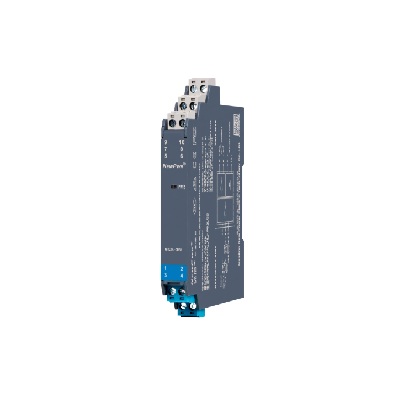
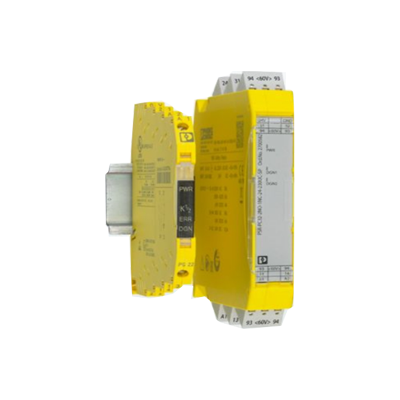
The NPEXA-CM31 is a safety control module launched by Nanjing Youbei Electric. Essentially, it is a compact, configurable safety PLC.The core positioning of the NPEXA-CM31 is as a central processing unit for a small safety system, replacing multiple traditional, complex combinations of safety relays to achieve more flexible and powerful safety control functions.
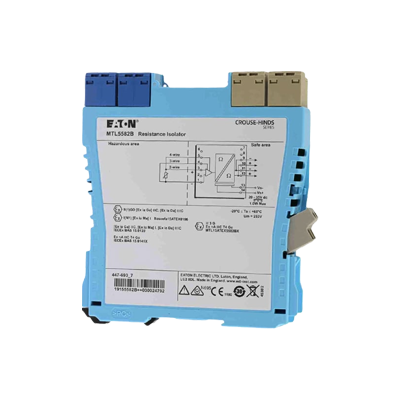
Analog input isolated barrier, it provides transmitters with power in the hazardous area and transfers 4~20mA signals from a hazardous area to a safe area. It allows transmission of HART communication signals. The input, output, and power supply are galvanically isolated from each other.
Supply Power supply 18 ~ 60 V DC
Input Input signal 4 ~ 20mA, HART
Line resistance approx. 75Ω
Available voltage
open-circuit voltage ≤ 26V; voltage: ≥ 16V at 20mA
Output Output signal 4 ~ 20mA, HART
Load resistance RL ≤ 550 Ω
Transfer characterisics
Accuracy 0.1 %F.S.
Temperature drift 30 ppm/℃
General parameters Response time ≤ 2 ms
Power dissipation 1.3 W
EMC data
Electromagnetic compatibility
IEC 61326-3-1
Dielectric strength
≥ 3000V AC (intrinsically safe side / non-intrinsically safe side); ≥ 1500V AC (Power supply /non-intrinsically safe side)
Insulation resistance
≥ 100 MΩ (Input /Output/Power supply)
Operating conditions
Operation temperature -20 ℃ ~ +60 ℃
Storage temperature -40 ℃ ~ +80 ℃
Suitable location
Mounting in safe area, and connected to the intrinsic safety apparatus in hazardous area zone 0, zone 1, zone 2, ⅡA, ⅡB, ⅡC, T4 ~ T6
The output signal is less than 3.6mA or greater than 21.5mA
Mechanical specifications
Connection method
Screw connection
Dimension
12.8mm (W) × 110mm (H) × 117mm (D)
Mounting type
DIN35 mm
Certified data
Product approvals
NEPSI, SIL, CE, FCC, CCS, CCC
NPEXA-CM31 is suitable for all automated equipment requiring high-level safety control, especially:
• Stamping machines, injection molding machines
• Industrial robots and robot workstations
• Automated assembly lines
• Packaging machinery
• Rubber and plastics machinery
• Elevator and escalator control systems
• Material handling systems (such as AGVs)
In these devices, it can simultaneously manage and coordinate multiple safety devices, for example:
• Processing signals from multiple emergency stop buttons.
• Monitoring the status of multiple safety door switches.
• Connecting with safety light curtains and laser scanners to achieve zone protection.
• Controlling two-hand buttons, enable switches, etc.
• Implementing complex interlocking logic, such as "the motor in zone B can only start when the safety door in zone A is open." Comparison with Traditional Safety Relays