Welcome to CW Green Tech Limited

info@cwlyautomation.com
86-136 6712 1125


In the world of industrial process measurement, consistent and accurate conductivity monitoring is crucial for ensuring product quality, process efficiency, and equipment safety. The Endress+Hauser CLS50-A1C1 compact conductivity sensor stands out as a robust and versatile solution designed to deliver reliable performance in even the most challenging environments.
Product Overview
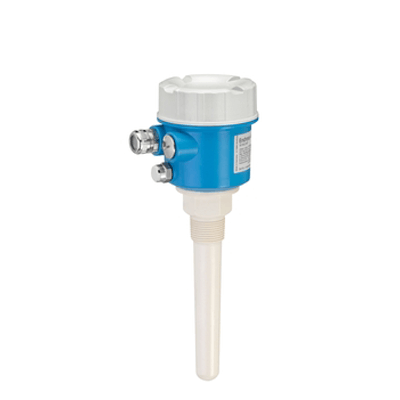
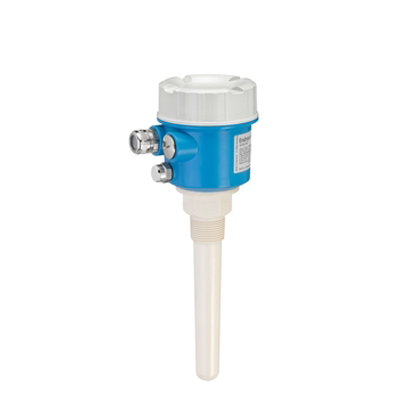
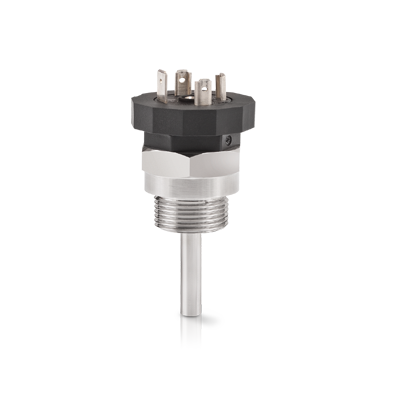
The CLS50-A1C1 is a fully encapsulated, 4-electrode conductivity sensor built for long-term stability and minimal maintenance. Its compact, threaded design (3/4" NPT) allows for easy installation directly into pipelines, tanks, or bypass assemblies. The core of its technology lies in the proven 4-electrode measurement principle, which effectively compensates for polarization effects and cable resistance, ensuring high accuracy across a wide measuring range. This makes it an ideal choice for applications in water treatment, chemical processing, pharmaceuticals, food and beverage, and power generation.
Key Technical Parameters
• Measurement Principle: 4-electrode conductivity
• Measured Variables: Conductivity and temperature
• Measuring Ranges: 0...2000 µS/cm (default, other ranges available)
• Process Temperature: -20...130 °C (-4...266 °F)
• Process Pressure: Up to 16 bar (232 psi) at 25°C
• Cell Constant: K = 0.51 cm⁻¹ (optimized for low to medium conductivity)
• Electrode Material: Stainless steel 1.4435 (316L)
• Housing Material: PPSU (Polyphenylsulfone), chemically resistant
• Connection: Fixed cable or various connector options
• Installation: 3/4" NPT thread
Core Advantages and Benefits
1. Unmatched Accuracy and Stability:
The 4-electrode system is the cornerstone of the CLS50's performance. By eliminating errors caused by fouling and cable effects, it provides stable, drift-free measurements, reducing the need for frequent calibration and ensuring process reliability.
2. Robust and Maintenance-Friendly Design:
Encapsulated in rugged, chemical-resistant PPSU and featuring stainless steel electrodes, the CLS50-A1C1 is built to last. It withstands aggressive media, high pressures, and temperature fluctuations. Its smooth surface and open design minimize fouling and allow for easy cleaning.
3. Seamless Integration and Compatibility:
The sensor is designed to work perfectly with Endress+Hauser's innovative Memosens digital technology. While the A1C1 variant features a classic analog output, the platform allows for easy upgradeability. Memosens offers predictive maintenance capabilities, data storage in the sensor head, and superior signal integrity, making it future-proof.
4. Versatile Application Range:
From monitoring deionization stages and controlling chemical dosing to detecting leaks in heat exchangers or ensuring rinse water purity, the CLS50-A1C1 covers a broad spectrum of tasks. Its K=0.51 cell constant is particularly suited for precise measurement in low-conductivity applications like ultrapure water or condensate monitoring.
5. Reduced Total Cost of Ownership:
Long service intervals, minimal maintenance requirements, and high diagnostic capabilities (when paired with a Memosens transmitter) lead to significantly lower operating costs over the sensor's entire lifecycle.
Conclusion
The Endress+Hauser CLS50-A1C1 conductivity sensor combines proven measurement technology with rugged construction to offer a dependable, low-maintenance solution for continuous process monitoring. Its accuracy, durability, and flexibility make it a superior choice for engineers and technicians seeking to optimize their processes, ensure consistent quality, and enhance operational safety. For reliable conductivity data in demanding conditions, the CLS50-A1C1 delivers exceptional value and performance.
Keywords: Endress+Hauser CLS50-A1C1, conductivity sensor, 4-electrode conductivity sensor, process monitoring, water treatment sensor, conductivity probe, Memosens, liquid analysis, industrial sensor, conductivity measurement, CLS50.