Welcome to CW Green Tech Limited

info@cwlyautomation.com
86-136 6712 1125


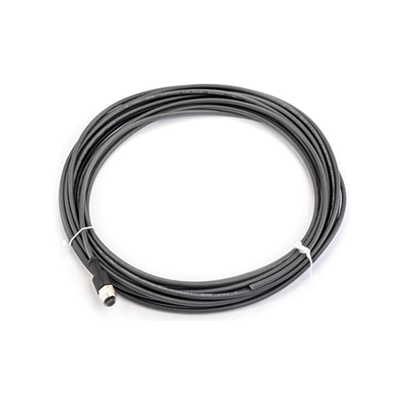
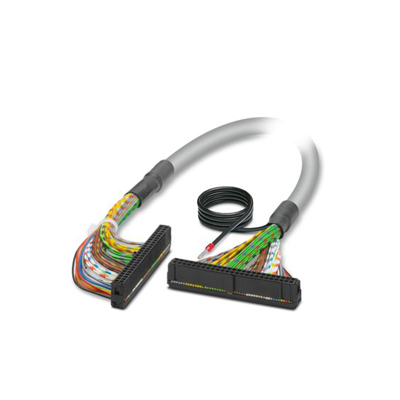
Bently Nevada 16925-25 is a high-performance, non-armored interconnect cable engineered for precise vibration and seismic signal transmission in industrial machinery monitoring systems. As part of the trusted 16925 Series, this 25-foot (7.6-meter) cable provides a reliable connection between Bently Nevada accelerometers and seismic transmitters to monitoring systems, ensuring critical vibration data is delivered with minimal interference from industrial electrical noise.
Manufactured in the USA, the 16925-25 features a flexible 3-conductor shielded design that balances signal protection with installation flexibility, making it ideal for routing through conduits, cable trays, or within equipment cabinets.
Key Features
Extended 25-Foot Length: Provides ample reach for sensors located at moderate distances from junction boxes or monitoring racks
Low-Noise Shielded Conductors: 22 AWG design with shielding protects against electromagnetic interference (EMI) and radio frequency interference (RFI), ensuring reliable low-voltage signal transmission
Flexible Non-Armored Jacket: Easy to route in tight spaces and conduit runs without the stiffness of armored alternatives
Standard Industrial Termination: MIL-C-5015 3-socket plug at the sensor end and terminal lugs at the system end for secure, moisture-resistant connections
Wide Temperature Range: Operates reliably from -40°C to +85°C (-40°F to +185°F), suitable for harsh industrial environments
Flame-Retardant Jacket: PVC jacket material provides additional safety in industrial settings
Technical Specifications
Parameter Specification
Model Number 16925-25
Manufacturer Bently Nevada (Baker Hughes)
Product Type Interconnect Cable / Extension Cable
Cable Length 25 feet (7.6 meters)
Cable Type 3-conductor shielded, non-armored
Wire Gauge 22 AWG (0.5 mm²)
Connector End A 3-socket MIL-C-5015 plug
Connector End B Terminal lugs (ring lugs)
Operating Temperature -40°C to +85°C (-40°F to +185°F)
Jacket Material Flame-retardant PVC
Product Origin United States
Weight Approximately 0.1-0.15 kg (100-150 g)
Warranty 12 months (supplier dependent)
Compatible Devices
The Bently Nevada 16925-25 is specifically designed for use with:
330400 Accelerometer
330425 Accelerometer
177230 Series Seismic Transmitters
3300 Monitoring System (connect A lead to "IN", B lead to "PWR", C lead to "COM")
2201 Monitoring System (connect A lead to "SIG/A", B lead to "PWR/B", C lead to "COM")
Wiring Instructions
The 16925-25 cable features three color-coded leads for straightforward connection to monitoring systems :
Lead 3300 System Connection 2201 System Connection
Lead "A" "IN" terminal "SIG/A" terminal
Lead "B" "PWR" terminal "PWR/B" terminal
Lead "C" "COM" terminal "COM" terminal
For complete wiring instructions, refer to the applicable monitor operation manual.
Industrial Applications
The 16925-25 is widely deployed in heavy industries requiring continuous machinery condition monitoring :
Power Generation: Vibration monitoring on turbines, generators, and cooling tower gearboxes
Oil & Gas: Refineries and pipeline compressor stations
Chemical Processing: Pump and compressor monitoring
Water Treatment Plants: Centrifugal pump vibration monitoring
Manufacturing: Industrial motor and fan condition monitoring
Pulp & Paper: Rotating machinery protection
16925 Series Model List
The 16925 Series is available in various lengths to accommodate different installation requirements:
Model Number Length Description
16925-10 10 feet (3.0 m) Non-armored interconnect cable
16925-12 12 feet (3.7 m) Non-armored interconnect cable
16925-15 15 feet (4.6 m) Non-armored interconnect cable
16925-17 17 feet (5.2 m) Precision interconnect cable
16925-18 18 feet (5.5 m) Non-armored interconnect cable
16925-20 20 feet (6.1 m) Non-armored interconnect cable
16925-23 23 feet (7.0 m) Copper conductor with foil/braid shielding
16925-25 25 feet (7.6 m) Standard non-armored configuration
16925-30 30 feet (9.1 m) Extended length variant
16925-33 33 feet (10.1 m) Extended length variant
16925-50 50 feet (15.2 m) Maximum standard length
Selection Guide: Armored vs. Non-Armored